


News
Online real-time news to know the first information of Motus

Traditional 6-DOF robots fall into serial and parallel categories, each with inherent performance limitations. Serial collaborative robots feature cascaded joints, delivering a large workspace, flexible posture adjustment and straightforward control. Nevertheless, their cantilever structure leads to low end-effector stiffness, cumulative motion errors and vibrations during high-speed operation, restricting their deployment in precision machining scenarios. Pure parallel robots (Stewart platforms) mount actuators near the base. With lightweight moving parts, they boast high overall stiffness and fast dynamic response. However, they suffer from a compact working envelope and limited posture range, making it difficult to adapt to diverse tasks.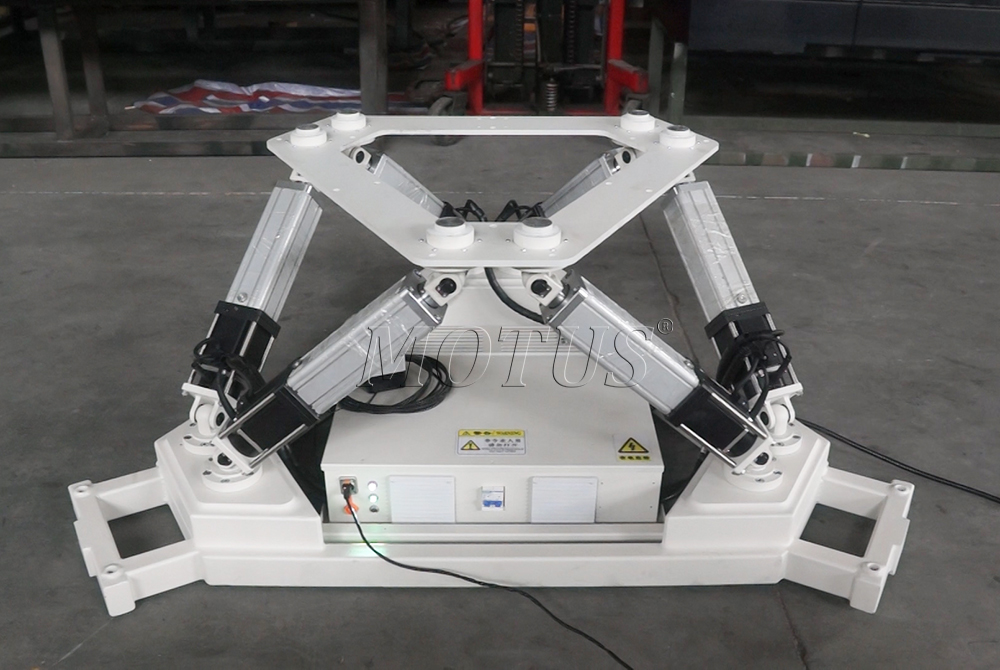
The hybrid serial-parallel 6-DOF collaborative robot innovatively combines merits of serial and parallel mechanisms. The parallel mechanism acts as the main load-bearing unit to ensure high system stiffness, superior positioning accuracy and rapid response. A serial joint module is mounted at the end to expand posture adjustment range and compensate for the narrow workspace of pure parallel robots. Achieving full 6-degree-of-freedom motion, this hybrid robot retains the safety features for human-robot collaboration while resolving the classic trade-off between stiffness and workspace of single-configuration robots.
Compared with conventional solutions, the hybrid configuration brings remarkable advantages. The parallel main body greatly reduces end deformation and suppresses vibration for higher repeat positioning accuracy, ideal for processes such as grinding, polishing and precision assembly. Meanwhile, the terminal serial joints grant the robot extended reach and flexible orientation to handle workpieces at multiple angles. Lightweight design further enhances dynamic performance. Equipped with force sensing, it meets safety standards for human-robot interaction.
Thanks to its distinctive structural properties, the hybrid 6-DOF collaborative robot can be widely applied in automotive component grinding, optical component assembly, aerospace small-part finishing and laboratory precision manipulation. Breaking the performance ceiling of traditional robots, it provides a new automation solution for precision manufacturing with high stiffness, ample workspace and compliant collaboration.


